Sponsored feature · Editorial standards apply · Advertising policy
Balanced Life Chronicle Longevity, memory & everyday science
Brain & Longevity
Field Essay · July 2026
Field Essay · 8 min read

For 34 Years I Caught Every Word in the Courtroom. Then I Couldn’t Find My Own Grandson’s Name — Until a 12-Minute Sound Gave It Back.

I spent nearly three and a half decades in a courtroom, setting down every name and figure the first time it was spoken. So when my own recall began to fray in retirement, I noticed fast — and an offhand remark about sound led me somewhere I never expected.

A retired couple walking, relaxed and clear-headed, on a sunlit forest path
I spent a career catching every word the first time. It took me far too long to notice my own memory going quiet.

For thirty-four years I could sit in a courtroom and set down every name, date and figure the instant it was spoken — no second pass, no asking anyone to repeat themselves. Recall was the one tool I trusted completely. So the afternoon I stood in my own kitchen and could not summon the name of my own grandson, I felt something close to dread.

It had been creeping in for a while. A name gone the instant I reached for it. Walking into a room and losing the reason I’d come. That dull, underwater feeling by mid-afternoon that no second cup of coffee ever seemed to lift. I told myself it was simply what happens after sixty. Everyone said so.

But I had spent my whole career catching the one word everyone else missed — a misheard name, a number off by a digit — and this did not feel like “just age.” It felt like something I was trained to take seriously.

1 in 9
American adults over 45 report subjective cognitive decline — a self-perceived worsening of memory or clarity not explained by another condition, according to the CDC. For most, it begins quietly. It is very easy to wave away.
01 The name I couldn’t find

My granddaughter is finishing a doctorate in neuroscience, and over dinner that spring I finally said it out loud: I’d been losing names. Words. Whole threads of thought. For months.

She didn’t look alarmed. She looked curious. “Have you ever heard of BDNF?” she asked.

She explained it the way you’d explain it to someone who’d spent a career listening for every syllable. BDNF — Brain-Derived Neurotrophic Factor — is a molecule some neuroscientists call “fertilizer for the brain.” It helps brain cells communicate and supports the everyday work of learning, focus, and memory. And its levels, he said, tend to drift lower as we age.

“So what raises it?” I asked.

“Movement. Sleep. And — here’s the part you’ll like — there’s research suggesting a specific brainwave rhythm may help encourage it. A frequency. Gamma waves.”

A frequency. After a lifetime of trusting chemistry — milligrams and molecules — the idea that my own brain had a rhythm it had simply fallen out of landed somewhere very deep.
02 What I found when I looked it up

I did what any retired pharmacist with time on her hands does: I read the literature, and I checked the citations. What surprised me was how mainstream it all was. Researchers have studied how the brain settles into different rhythms — slow waves for deep sleep, faster ones for focus — for decades. Gamma waves are among the fastest, and they tend to appear when the mind is sharp, engaged, and connecting one idea to the next.

The core idea. The brain doesn’t only run on chemistry — it runs on rhythm. Networks of neurons fire together in waves, and different mental states ride on different frequencies. Some research suggests that gently nudging the brain toward gamma-range activity may be associated with the same BDNF signaling tied to learning and memory. What follows isn’t a drug or a device. It’s sound — carefully arranged, listened to for a few minutes a day.

That’s when my son mentioned that a team of neuroscientists and sound engineers had turned this very principle into something anyone could use at home. No clinic. No prescription. A 12-minute audio track, engineered to gently guide the brain toward those gamma frequencies using layered patterns of sound. They call it The Brain Song.

Naturally I was skeptical — skepticism was half my job. But the reasoning held up, and there was nothing to swallow, nothing to remember to take, no interactions to check. Just press play, put on headphones, and listen.

03 How a “song” could possibly work

Here is what finally made it click for me. Picture two identical tuning forks: strike one near the other, and the second begins to hum at the very same pitch. It has no choice — it simply falls into step. Your brain does something loosely similar with rhythm: presented with a steady, well-built pattern of sound, its own electrical activity tends to drift toward that pattern. Researchers call it entrainment.

🎧
A 12-Minute Daily Listen The whole routine
No app to master, no schedule to keep. You put on headphones, press play, and let one short track do the work — ideally at the same time each day.
Digital audio · listen anywhere
🌊
Gamma-Range Sound Patterns
The track is layered to gently steer the brain toward the faster gamma rhythms that researchers link with focus, learning, and sharp, connected thinking.
Built on modern brainwave research
🧠
The BDNF Connection “Fertilizer for the brain”
BDNF supports healthy communication between brain cells. Some research suggests gamma activity may help encourage it — the everyday molecule behind learning and memory.
Neuroscience · published research
🎵
Relaxing, Not Draining
Most people describe it as calming rather than stimulating — something to look forward to, not another chore. Many pair it with their morning coffee or a quiet moment before bed.
Enjoyed in the comfort of home
Editorial note. The Brain Song is a wellness audio program, not a medical treatment. It is not intended to diagnose, treat, cure, or prevent any disease. If you are experiencing significant or sudden changes in memory or thinking, please consult a qualified healthcare provider.
04 Three weeks of listening

I started on a Monday, with my morning coffee, twelve minutes and a decent pair of headphones. I kept notes — thirty-four years of logging testimony is a hard habit to break.

Log · Week 1

Pleasant. Quieter in my head than I expected — as if a background hum I’d stopped noticing had been turned down. Too soon to call it anything. Wrote it down anyway.

Log · Week 2

My afternoons feel longer. That three-o’clock fog didn’t roll in the way it usually does. Could be the weather. Could be me. Still, I noticed — noticing was always my job.

Log · Week 3

Ran into my grandson at the market and his name arrived the instant I saw him — first time in months. My daughter said I sounded quicker on the phone. I hadn’t told her I’d changed a thing.

I’m careful about what I claim — old habit. I’m a court reporter, not a neuroscientist, and three weeks is three weeks. But I feel clearer than I have in a long while, the routine costs me twelve quiet minutes a day, and I have no intention of stopping.
The fog didn’t lift all at once. It lifted the way a courtroom empties after a long trial — you never catch the exact moment, you just realize, one evening, that your head is finally quiet and clear.
Featured in this essayDigital · instant access
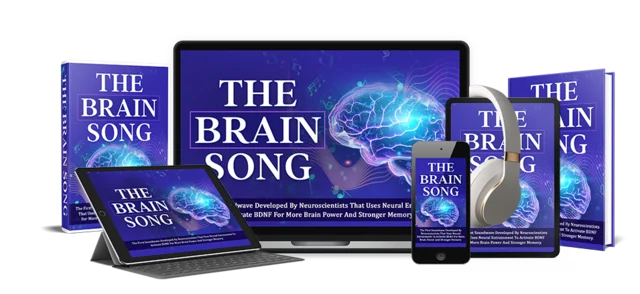
The Brain Song — digital audio program shown on laptop, tablet, phone and headphones

The Brain Song — Activate Your Brainwaves for a Sharper, Healthier Mind

★★★★★
4.7 average · 2,900+ listeners

A simple, 12-minute digital audio built where neuroscience meets sound — designed to gently guide the brain toward the gamma rhythms linked with focus, learning, and memory. Delivered instantly, backed by a 60-day money-back guarantee.

$39 / one-time · lifetime access
Instant digital download — listen today
Listen to The Brain Song
Digital audio program · results vary · 60-day money-back guarantee
🎧 Just press play⚡ Instant access↩ 60-day guarantee📱 Phone, tablet & PC

Background & further reading

  1. Brain-Derived Neurotrophic Factor and its role in learning and memoryPMC / NCBI
  2. Gamma oscillations and their association with cognitive functionPubMed
  3. Auditory rhythmic stimulation and neural entrainment: a reviewPMC / NCBI
  4. Sound, music and the aging brain: cognitive and emotional effectsFrontiers in Neuroscience
  5. Exercise, BDNF and brain plasticity in older adultsPubMed
Reader notes
241 responses · sorted by most helpful
GT
Gerald T.
Boise, ID · ✓ Verified · 3 days ago
★★★★★

The retirement fog Ruth describes is exactly what I’d been living with. Twelve minutes with headphones after breakfast became the calmest part of my day. Three weeks in, my wife said I seemed “more present” at dinner — and I hadn’t told her I’d started anything.

PN
Patricia N.
Dayton, OH · ✓ Verified · 5 days ago
★★★★★

I’ve tried pills and apps and always forgot them. A 12-minute track I actually look forward to? That one I remember. The mid-afternoon wall I’d accepted as permanent eased within a couple of weeks. Simple, and honestly relaxing.

CalvinM
Calvin M.
Tucson, AZ · ✓ Verified · 1 week ago
★★★★☆

Retired airline dispatcher, career skeptic. I came in expecting nothing and ended up running it every morning. I can’t hand you a brain scan — I can tell you my word-finding is noticeably better two months on. Four stars and a permanent spot in my routine.

MoiraD
Moira D.
Portland, ME · ✓ Verified · 1 week ago
★★★★★

I set it up for my husband of 72 without making a fuss about it. Three weeks later he phoned me from the store — he’d remembered the whole list without his phone, first time in ages. He puts the headphones on himself now. Had to share that somewhere.